Acho Tenzin handles the mountain roads deftly, in no hurry, often giving way for the vehicles behind. Nochu Sonam keeps an eye ahead and the sides of the road ensuring that he does not miss telling us any stories of the land, the people, myths, histories, spirits, local deities, vegetation, animals, and the many possible hiking trails. Both keep chatting with each other and with us in a mix of English and Dzonghka about their lives, families, automobiles, and ideas, places, and food that will make the journey memorable for their guests (that is us).
It is said that the guide and the driver can make or break your Bhutan journey. Since 2019, the Bhutanese government has made it mandatory that a guide should accompany Indian travelers in Bhutan through the full duration of their trip. (For other foreign travellers, guides were always mandatory). We were incredibly lucky to have Sonam Tshering and Tenzin as our guide and the driver respectively (via Rustik Travel).
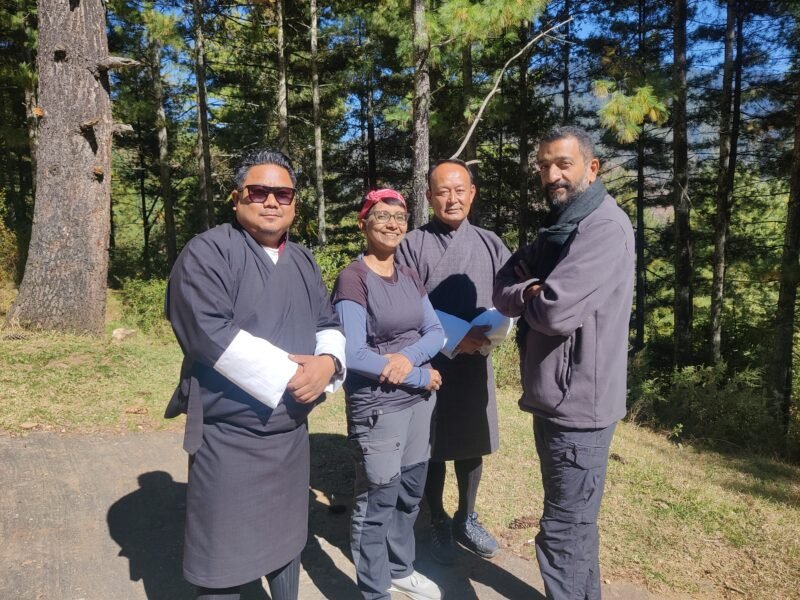
They are not the typical guide and driver. Acho Tenzin, now in his late 50s (acho is the Bhutanese word that means ‘elder brother’ and used with respect while addressing) worked as a manager in some hotels, before starting his own restaurant, which then had to be shut down during COVID-19. He then moved to Australia to be with his daughters, but returned after two years and started his driving gig. He was elder to us, and hence acho. Nochu Sonam (nochu is the word for ‘younger brother’) studied in India and Australia, then worked for a few years before choosing to pursue his entrepreneurial ambitions in travel and hiking. He is trained as both a cultural guide and a trekking guide. Sonam and Tenzin met each other for the first because of our trip and they hit off well.
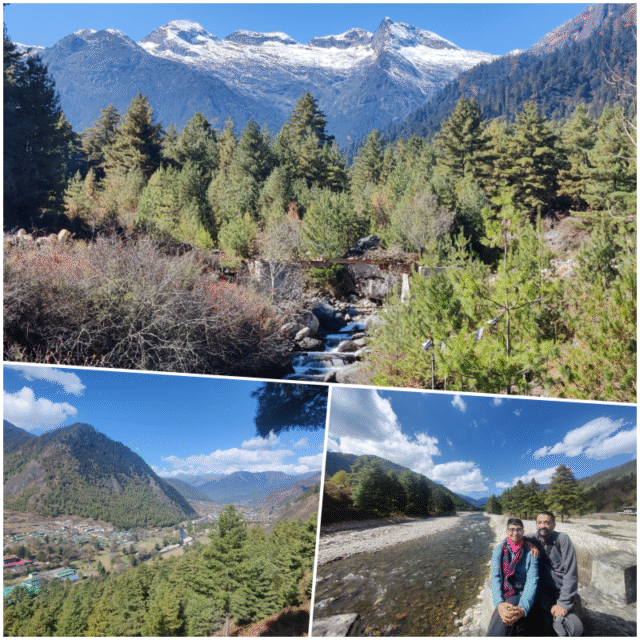
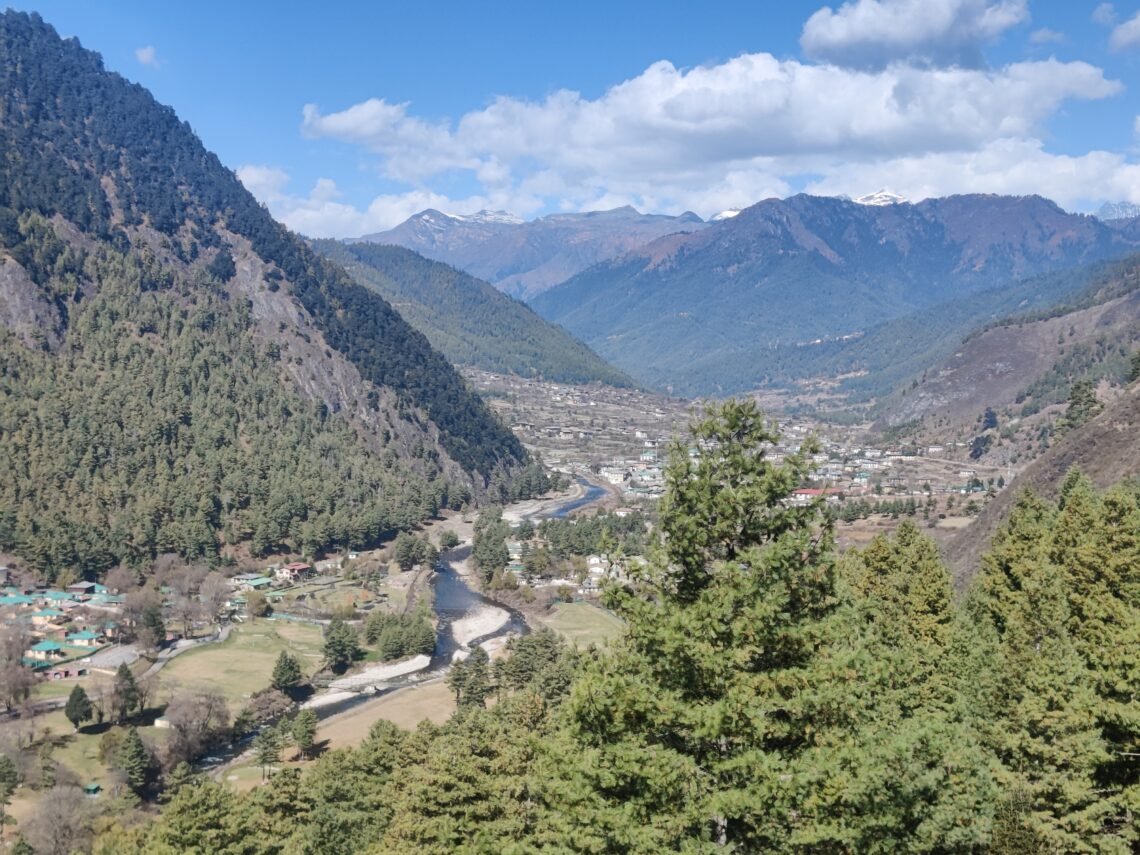
This was our first time where a trip was done through a travel partner, as we always like to do the planning by ourselves. In this case also, we chose the places and the duration, since we wanted a slow travel. What to do in each place was not certain, and our idea was to figure it out as we go along, though the travel planner had made an itinerary based on the places we chose. Haa in the western Bhutan is not a popular tourist destination (limited hotels and food) and often visited by only Europeans, either as a day trip or overnight stay. Occasionally, the hiking enthusiasts stay back. So, seeing our three nights plan of Haa was puzzling for Sonam and Tenzin.
But soon they realized our interests and were quick enough to chart out plans for long walks/hikes. The tiny town Haa, with a single market street and a few residential places, was charming and picturesque.
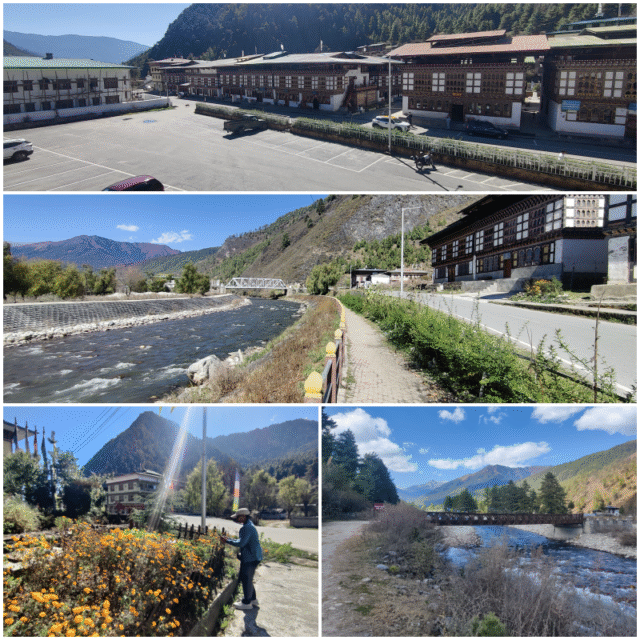
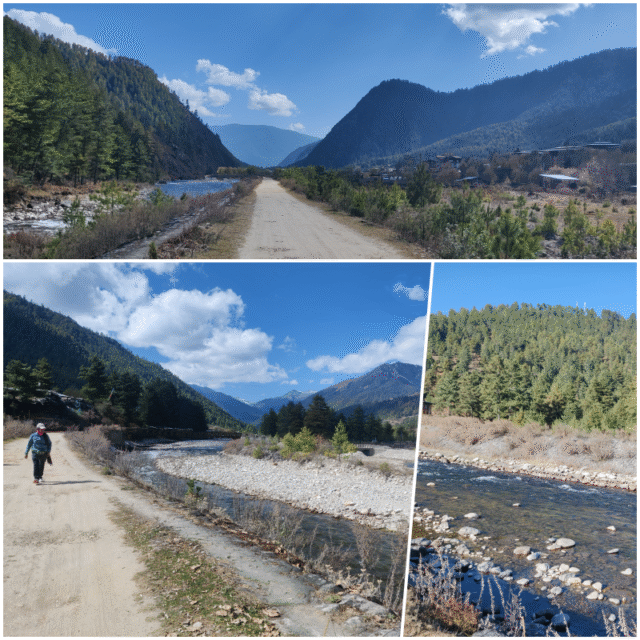
One of us wanted to eat the Himalayan trout. So Tenzin made an unusual request to the resort management to get permission for him to cook for us, which was granted. We then went searching for the trout: a hike by the river trail to a government-owned farm (which was closed), a drive to a meat shop (which didn’t have trout), and another drive to a private farm (where trouts were too small). So the trout plan was abandoned. But that’s the extra mile our acho and nochu were willing to go to make our trip memorable. Four hikes/walks, a drive to the last village in the border, and another random drive through the hills. And of course, the White Temple and the Black Temple that are part of the tourist itinerary. We couldn’t have asked for better than this in Haa!
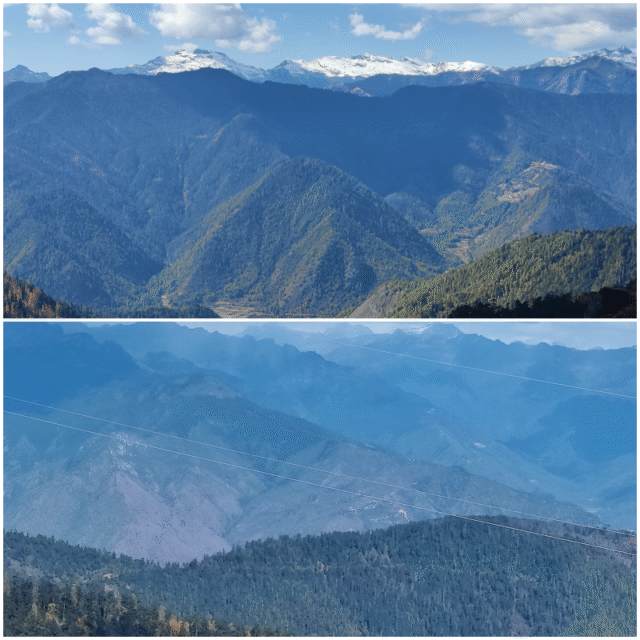
From Haa, it was Paro via the Chele la. At 3988 metres, Chele pass (la) is the highest motorable road in Bhutan. On one side is the view of Haa valley and the other side is the Paro valley. As we started the climb through the winding roads from Haa, before reaching Chele la, there were enough spots to stop by and enjoy the magical views of Haa valley. Chele la is a tourist spot, though was not crowded. We did things that many tourists do—hanging around, but also a short ridge walk. Travelling via Chele la in winter is often tricky as the roads might have black ice or get closed because of snow fall and possibility of avalanches.
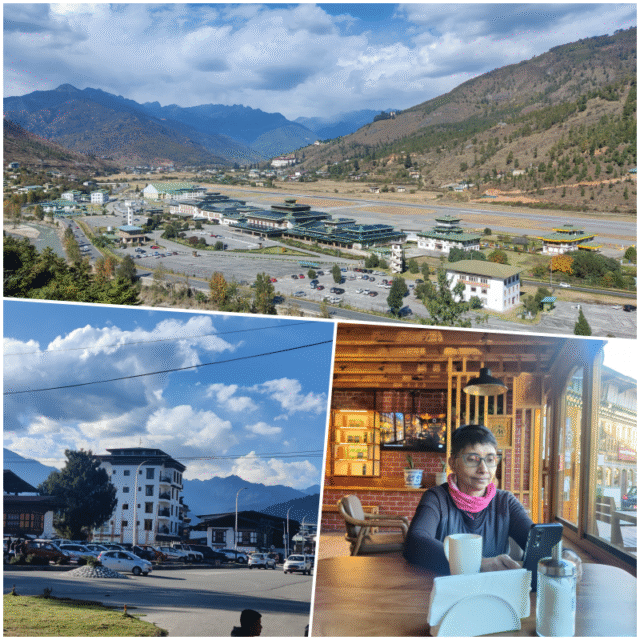
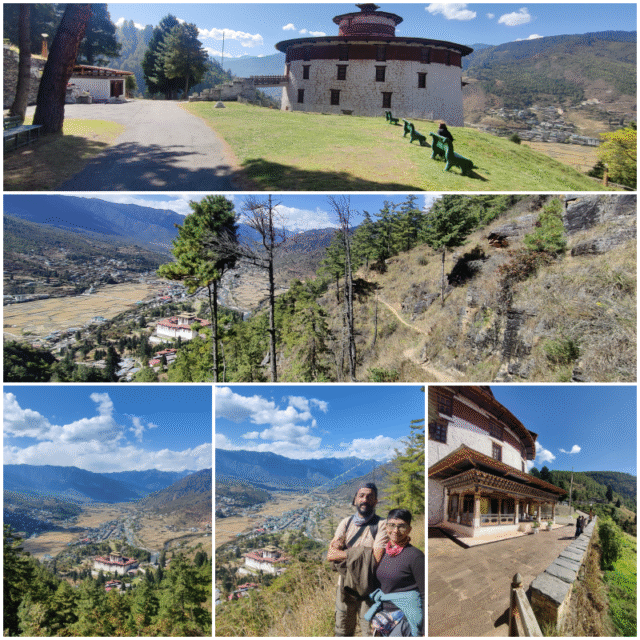
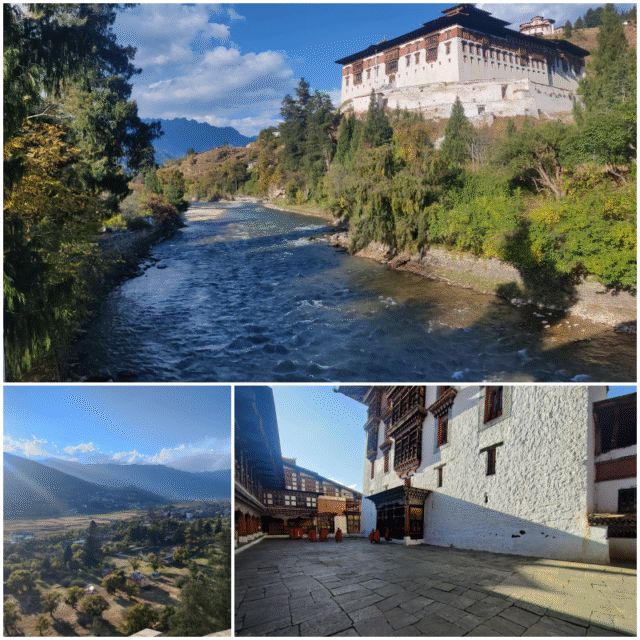
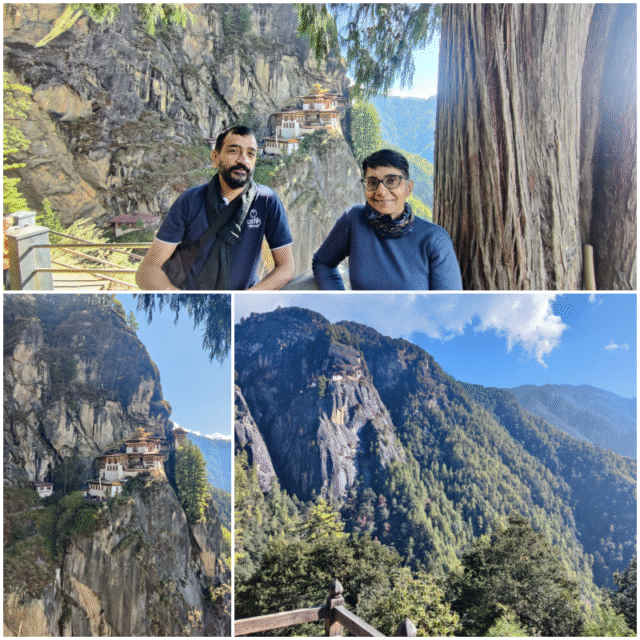
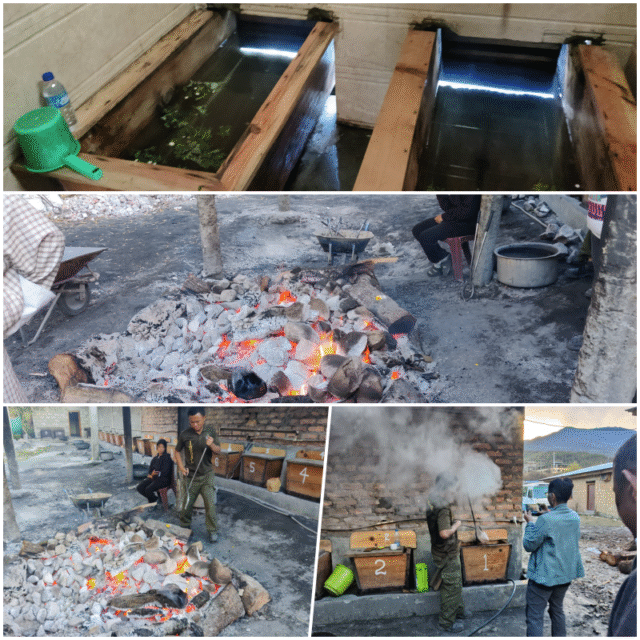
Paro schedule was tweaked by Sonam and Tenzin to help us get the best based on our interests. So, following the visit to the National Museum was a short hike from the Museum to Zuri Dzong and a little beyond. Zuri Dzong is one of the oldest fortress (considered to be built around 1350) and is protected by double walls and a moat. It is now not open for tourists. This was a pleasant short hike that offered some stunning panoramic views of Paro. Rinpung Dzong in Paro, the fortress that hosts administrative buildings, monastery and temples is part of any itinerary and deservingly so. An afternoon at Rinpung Dzong and then we walked back to the town to hang around at the popular Mountain Cafe. The third day was dedicated for the must-do in Paro/Bhutan – the trek to the iconic Tiger’s Nest monastery. The mid-way café offered a sumptuous vegetarian lunch. By evening, it was time for the soothing hot stone bath.
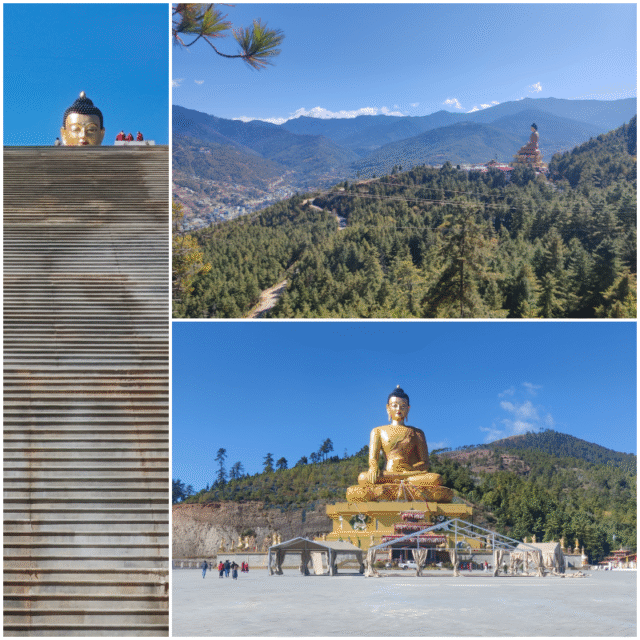
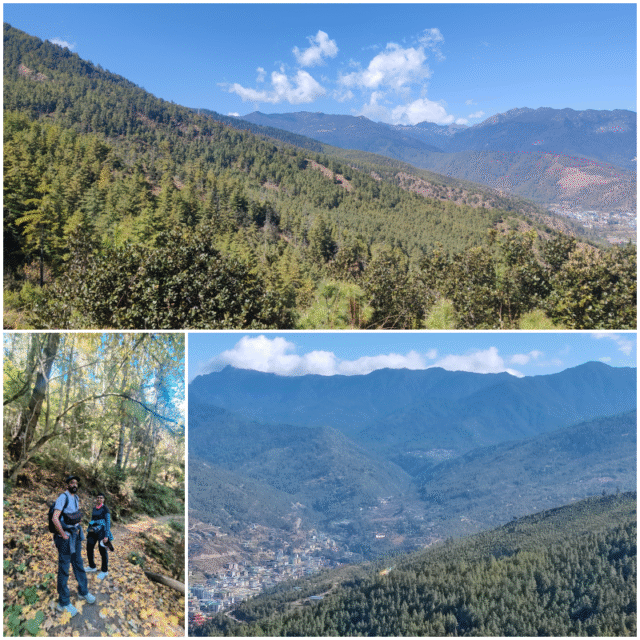
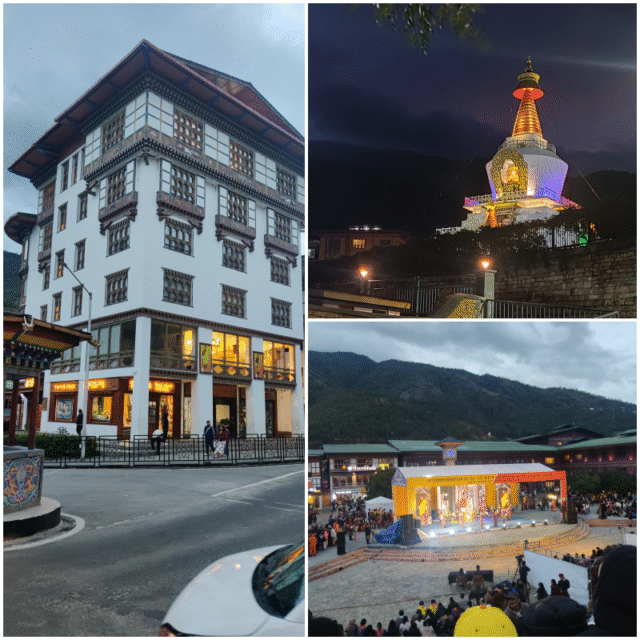
Thimphu was the final leg. Among the popular tourist sites, we kept to Tashichho Dzong, the magnificent fortress and the Great Buddha Dordenma. We skipped going inside the Memorial Chorten, and instead took a walk around it, on the city roads. We skipped the Takin preserve as well, and instead went ahead to the Sangaygang view point, and did a hike on the Wangditse nature trail. The Great Buddha Dordenma is the tallest sitting Buddha statue, overlooking the Thimphu valley in the hills of Kuensel Phodrang. From the Great Buddha Dordenma, it was again a refreshing hike of 5 km through the Kuensel Phodrang nature park.
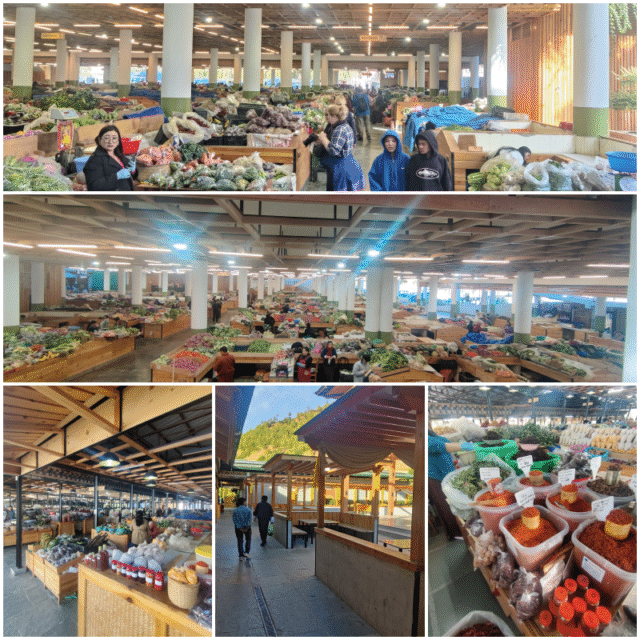
A visit to the Thimphu farmer’s market was the perfect way to end a trip that etched ever-lasting memories in our minds and rejuvenated our bodies. Having seen markets in a few Asian and European countries, we were expecting an European kind of market. What awaited us was beyond our imagination! Come to think of it, we should have expected neatness and silence after being in Bhutan for 8 days. But a quiet market is an oxymoron, isn’t it? Two floors filled with stalls of neatly arranged fresh veggies (ground floor) and spices, meat, and cheese (second floors), with the meat and cheese sections a little separated from the spices section. No one called out to us to buy their wares. We strolled around, occasionally stopping to look closely at a few items and buying some spices.
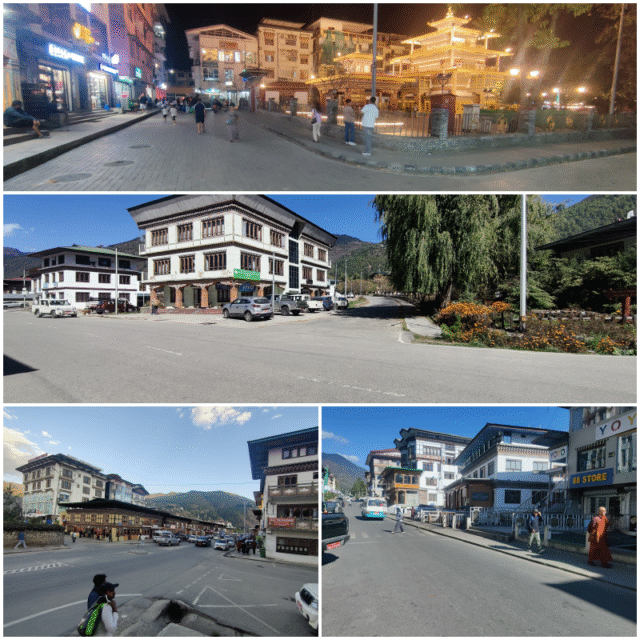
Bhutan is unlike any other South Asian country. Cleanliness, impeccable civic sense, orderly traffic! We didn’t hear honking not even once during our stay and vehicles always stop for pedestrians to cross the road. For Bhutanese, national/cultural pride are displayed in daily action, and not in WhatsApp forwards as we Indians chose to do. Respect for nature and consideration of fellow human beings are their way of life. Pursue happiness but not at the cost of hurting others is something we could learn from this magnificent country!
All set to return in October 2027 !