
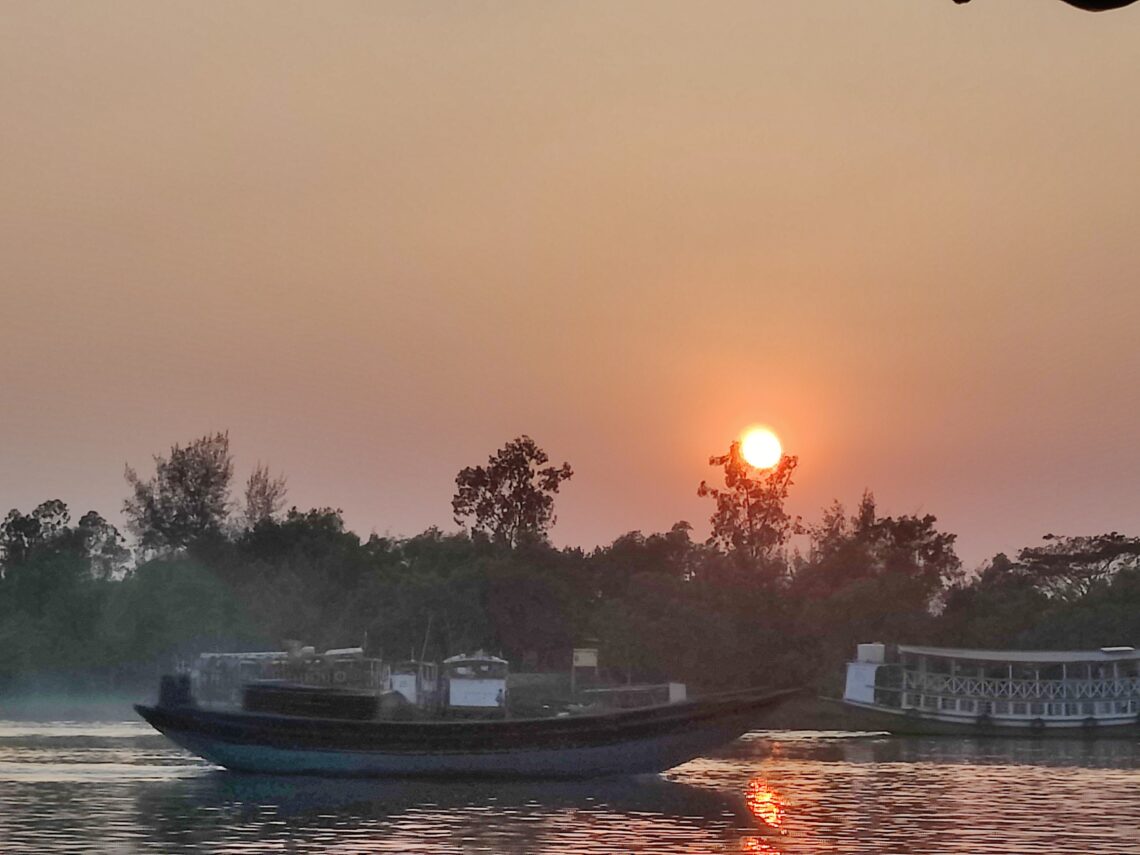
“But here, in the tide country, transformation is the rule of life: rivers stray from week to week, and islands are made and unmade in days. In other places forests take centuries, even millennia, to regenerate; but mangroves can recolonize a denuded island in ten to fifteen years. Could it be the very rhythms of the earth were quickened here so that they unfolded at an accelerated pace?”
The Hungry Tide, Amitav Ghosh.
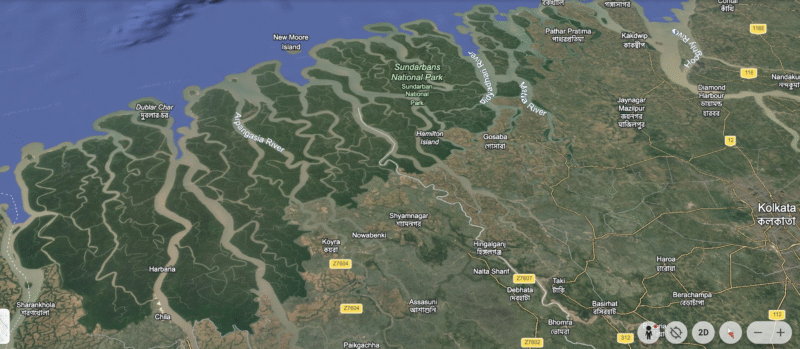
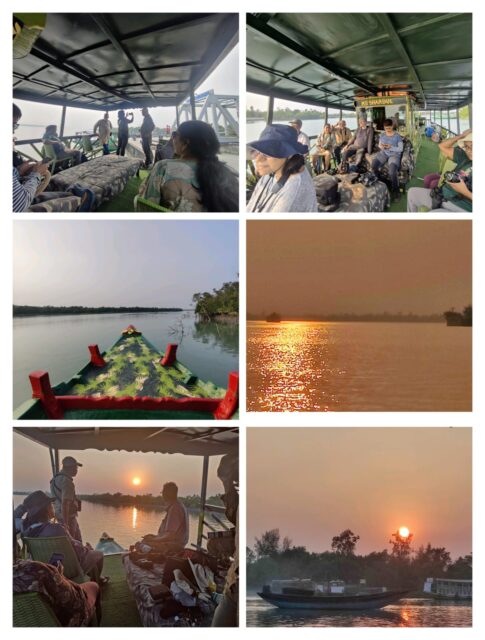
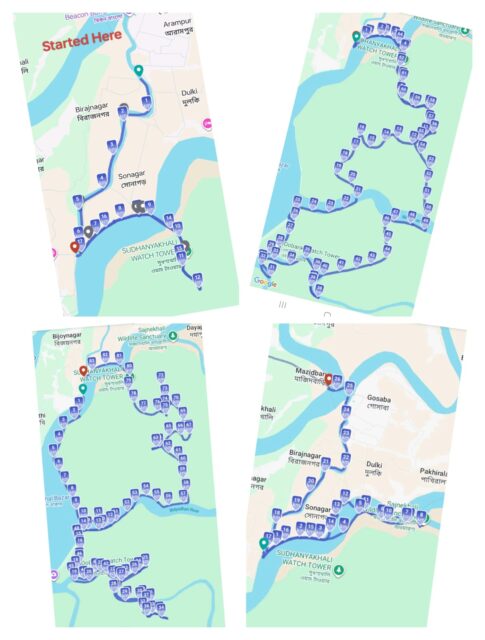
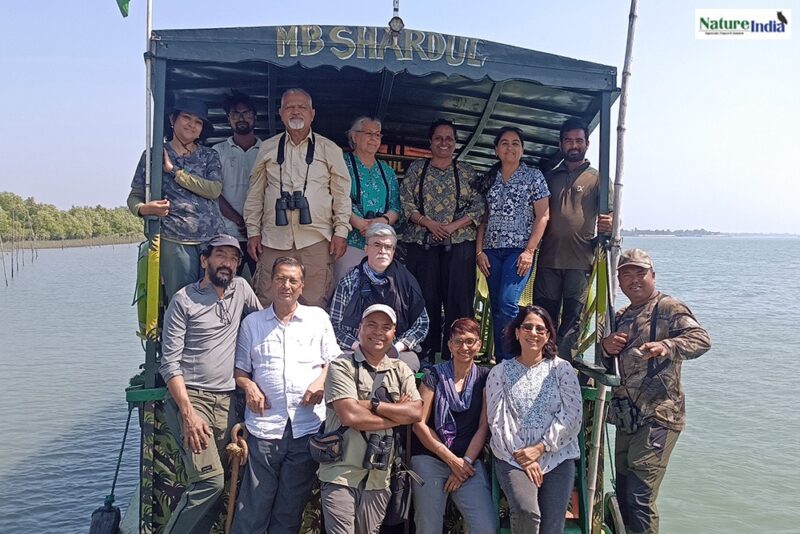
It is said that Sundarbans, the world’s largest mangrove forests exist both in time and space. As time constantly shapes and reshapes it. Ever since we read The Hungry Tide, almost two decades back, Sundarbans had called to us, but we could visit the tide country only in February 2026. During the four days of boat ride in the endless lagoon through a labyrinth of rivers, canals, and creeks, spotting birds and other wildlife, admiring in awe the harsh landscape, listening to Adesh sharing his inspiring depth of knowledge and humorous anecdotes to his captive audience, eating in regular intervals all the delicacies whipped up by the in-boat chef, and chatting with the fellow birders, we felt that there was a reason for the delay; we would not have enjoyed the visit as much if we had travelled alone or with another group. Such were the group’s harmony and camaraderie that we sometimes forgot we were on a birding trip, much to Adesh’s exasperation!
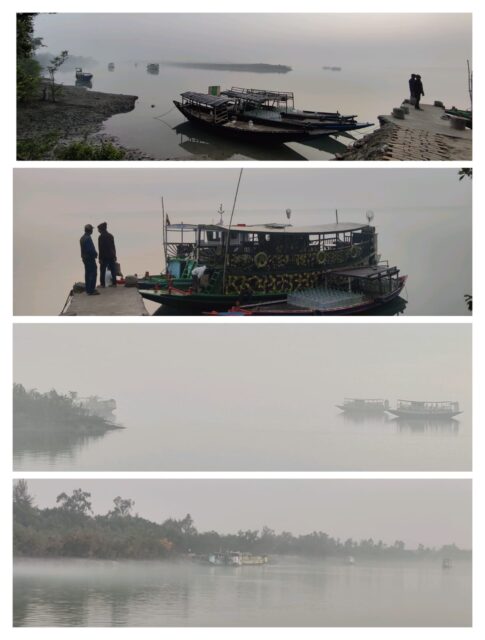
When Nature India announced their 2026 Sundarbans, it had got full by the time we expressed interest. Luckily, as there were several others like us, Nature India put together a second trip. We gladly signed up.
As soon as we boarded the boat at Gadkhali, around 2 p.m., we dug into a sumptuous lunch. Birding too started around the same time, with the black-capped night heron being the first in a long list of birds we spotted in the next three days.

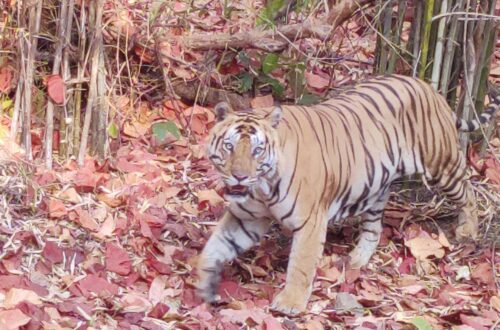
Sundarbans is atypical! The world’s largest mangrove forest got its name from Sundari (Heritiera fomes), the dominant species among the 78 species of mangroves (plus adaptations) in the region. Only accessible through boat, Sundarbans National Park is host to a wide variety of flora, both aquatic and terrestrial, and fauna. Sundarbans is also the only mangrove forest that is inhabited by tigers. Tigers here are man-eaters (probably due to the salty meat) and have adapted to swimming long distances in brackish water. We all wished we could spot one crossing the water; all we found was pugmarks.
But here is the thing: wildlife safaris, especially in tiger reserves, are often about tigers only. Or at least that’s the ‘tourism’ version of it. But they are far more than that. It is about the immersive experience, coming from an awe and respect for nature. It’s about conservation and learning. It is about the humble recognition and appreciation that in an interdependent ecosystem we humans are just one part. That’s why we do our wildlife trips only with Nature India where Adesh and Mandar’s passion for nature turns highly infectious for the group.
Where else would one witness someone identify a pale-billed flower pecker, the smallest bird, all of 6–8 cm, as it flits about on a dense tree branch at a distance; hear a faraway birdcall and recognize it as mating call of pin-striped tit-babbler; identify a bird hovering up above in the sky as black-winged kite; notice the faint movement on the sandy shore half-a-kilometer away and know it’s a Tibetan sand plover; and see a bird in flight at a distance for a second and tell us it’s green-billed malkoha! And between all these, learn that there are 69 types of plovers; how and why different plovers evolved to have different types of beaks and style of probing for food; the contentious history and colonial hangovers of naming birds; why some species have sexual dimorphism; how birds die; if it’s really possible to approximate the lifespan of a bird; differences between humming birds and sunbirds; all swifts can only hang from trees and not perch, except for the tree swift; India has 12 types of kingfishers while Indonesia has 36; and a thousand other such utterly fascinating facts and intricate knowledge. In Adesh’s own words, these trips are educational and not leisure holidays. For us, it was a highly enjoyable and immersive educational trip.
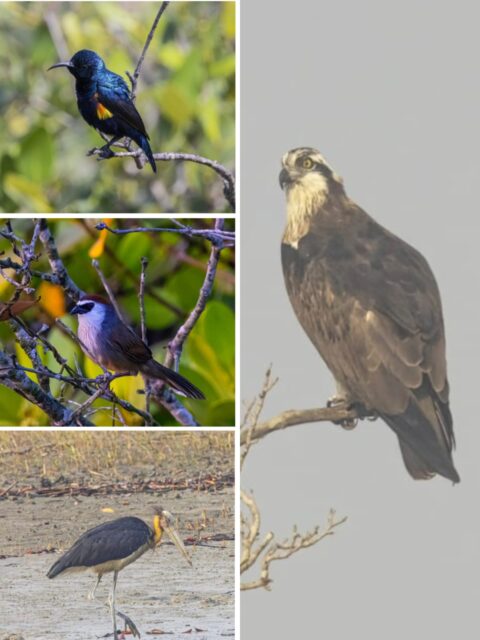
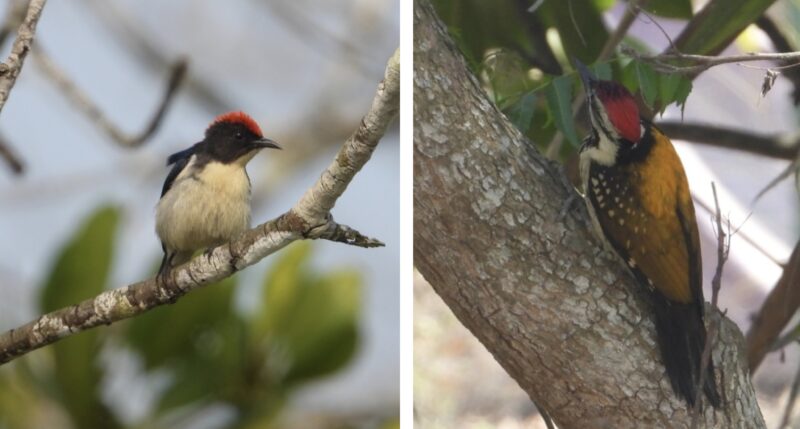
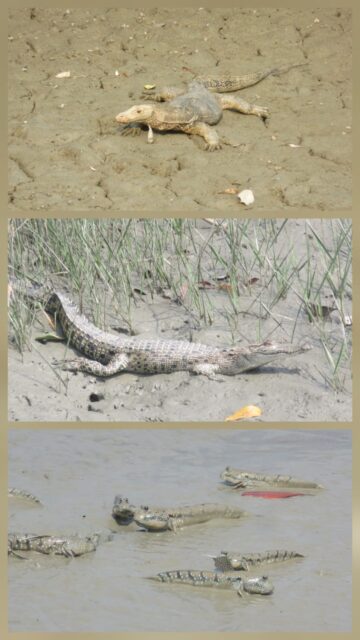
In addition to around 80 species of birds (of the close-to-300 species recorded in Sundarbans), we spotted salt-water (estuarine) crocodiles, water monitor lizards, small-clawed otters, wild hog, terrapins, jungle cats, rhesus macaques, spotted deers, mud skippers, crabs, and jelly fish. Of the 12 types of kingfishers in India, Sundarbans has eight and we spotted six of them.
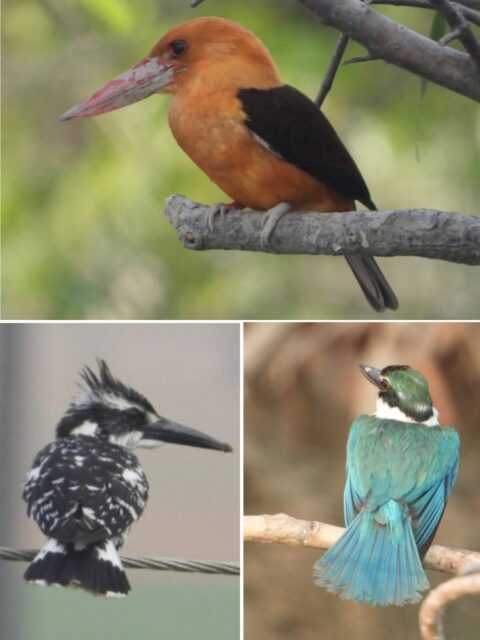
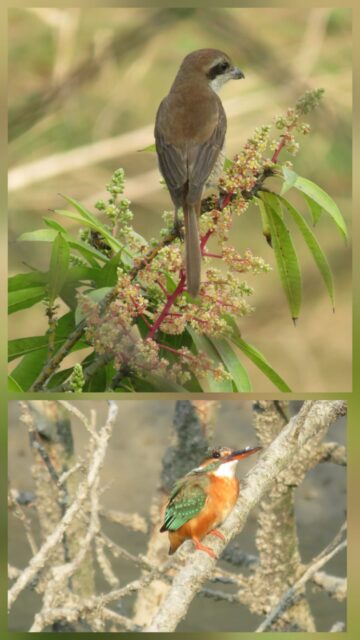
Making this even more memorable was the crew. Nityanand, the boat owner, is himself a guide & photographer and has many unique sightings to his credit. The captain Anjan is equally sporty. Both can spot birds kilometers away, sense a small movement in the mangroves or shores, and spot the camouflaged crocodiles basking in the sunshine. That just adds to the fire power.
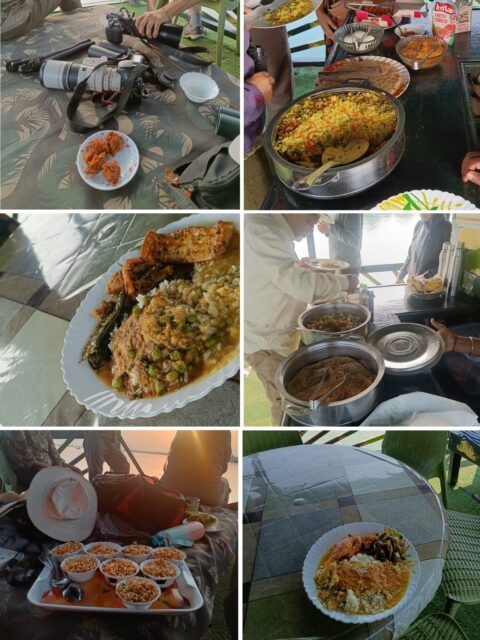
While we were busy birding and having intense and nonsense chats about anything and everything, the cook and his assistant were working hard in the lower-level kitchen to keep us well-fed. Mouthwatering snacks/fruits/drinks were served at regular intervals between breakfast, lunch, and dinner. We went ashore to the resort in Bally Island only for the night stay. Dinner was cooked in the boat and served to us in the resort’s dining room.
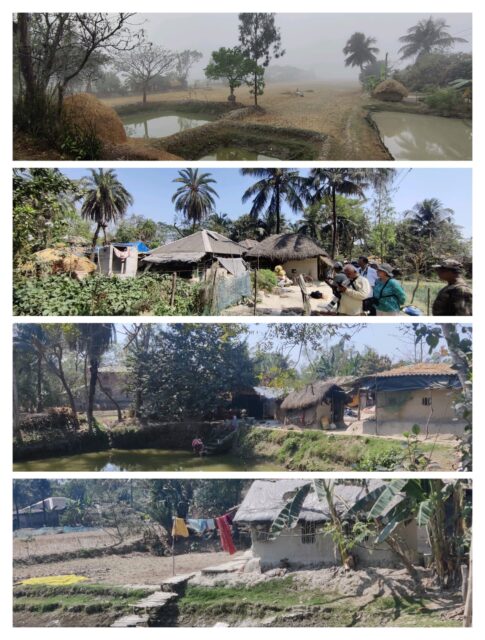
Besides all these, one story brought alive the harsh realities, the hungry tides, and the fragile lives in this delta. For Ashish Dhar, who we met on the last day, life changed forever in 2021. It was the seventh day of their eight-day fishing trip. He had fever; his partner could not come, so his wife had insisted to take his son along. His boat was in one of the canals and he was taking a nap, covered in a blanket. He woke up hearing the shouts of his fellow-fishermen. On removing the blanket, he found himself staring at a tiger. His instinct was to push the tiger away. While losing consciousness, he prayed, “Mother, save me.” He woke up from coma after eight months. The tiger had mauled his head, but it was driven away by his fellow-fishermen by shouting and throwing things at it. While Ashish was lucky enough to survive (though still not in good health and needs one more surgery), several others get killed by tigers regularly. The only livelihood activities available in Sundarbans are fishing and collecting honey and firewood from the forest, both highly dangerous. So many men lose their lives that a term has been coined for their wives: tiger widows. It is said that every year 40+ people lose their lives to tiger attacks. There is now a cooperative society of widows, which sells forest produce and handicrafts. All of us did plenty of purchase at the store. Yet the honey is priced so cheap that it does not reflect the fact that people risk their lives to collect it!
Sundarbans indeed is an unparalleled experience. It is surreal. And it makes you think deeply.

Very well written and beautifully presented. The photographs are also excellent and truly capture the essence of the place. I could connect with your blog instantly, as I had the opportunity to visit the Sundarbans exactly a year ago, and reading your piece brought back many wonderful memories of that experience.
Your narration makes the reader feel as if they are travelling along with you through the unique landscape and rich biodiversity of the region. Please keep sharing such engaging and insightful posts.
Thanks and best wishes.
Mahesh Goklani
Thanks Mahesh for the appreciation !